
Cancerguard™
Multi-Signal Cancer Detection
Integrated DNA Methylation and Protein Analysis for Early Cancer Screening
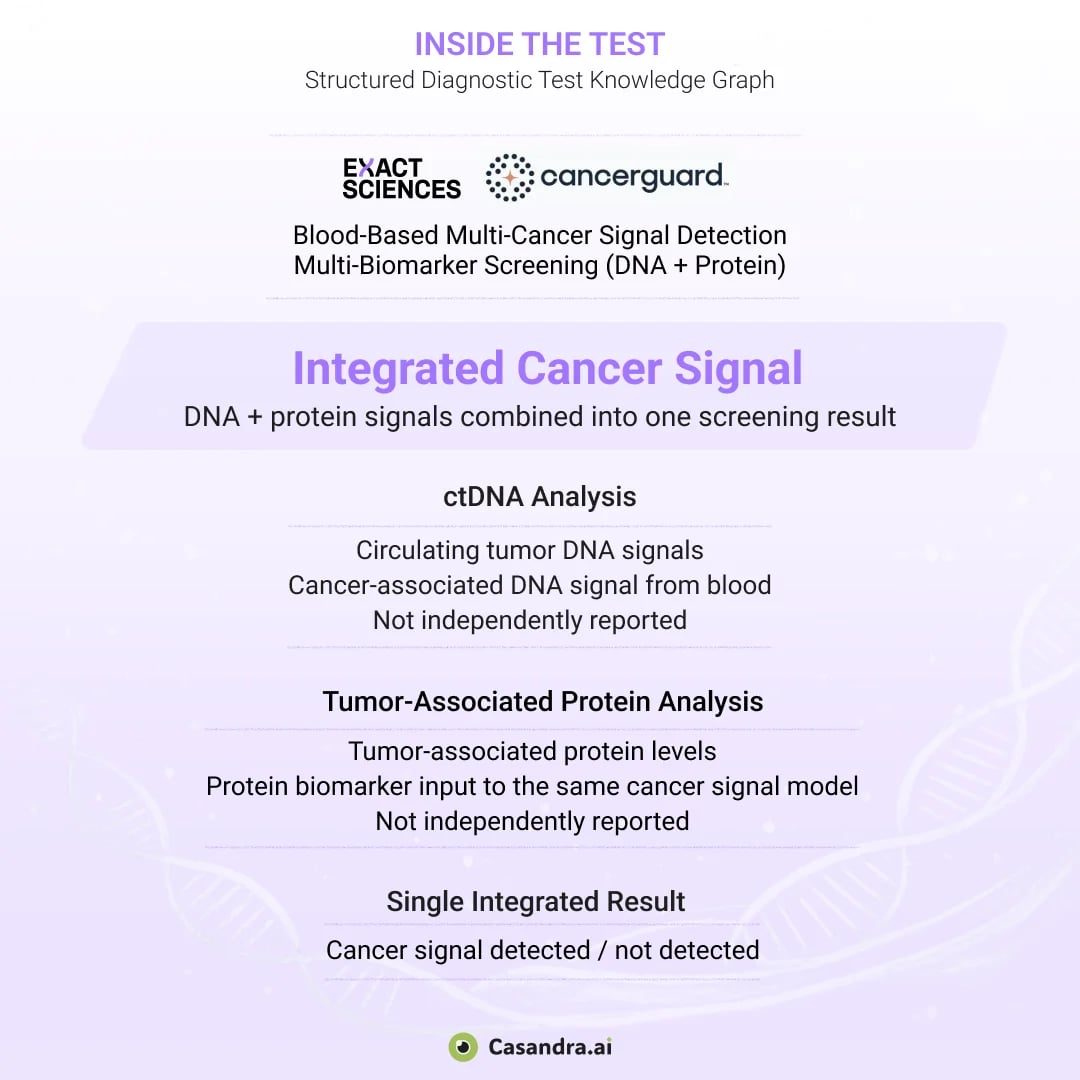
Cancerguard isn't looking for a mutation.
It's a signal detection system.
Exact Sciences' Cancerguard is a multi-cancer early detection (MCED) test that analyzes blood for cancer-associated patterns across DNA and protein. It is designed to detect signals associated with cancers such as pancreatic, lung, liver, esophageal, stomach, and ovarian.
Instead of reporting specific mutations or individual biomarkers, the assay integrates multiple biological signals into a single result.
What the Test Measures
DNA Methylation Signals
- Analysis of methylation patterns from circulating tumor DNA (ctDNA)
- Captures epigenetic changes associated with cancer
- Enables detection of tumor-derived signals without relying on specific mutations
Protein Biomarkers
- Measurement of tumor-associated protein levels in blood
- Reflects biological processes associated with malignancy
- Provides an independent signal complementary to DNA-based analysis
How the Test Works
Multi-Signal Integration
- Combines DNA methylation and protein signals into a unified model
- Analyzes independent biological inputs together rather than separately
- Produces a single integrated classification
What the Test Reports
Cancer Signal Status
- Cancer signal detected
- Cancer signal not detected
Because the signals are integrated, individual DNA or protein results are not reported independently.
Why This Matters
This test is designed for screening—not therapy selection.
Unlike genomic profiling assays that identify actionable mutations, multi-cancer early detection tests focus on identifying the presence of cancer-associated signals before clinical symptoms emerge.
By integrating multiple signal types, the assay aims to improve sensitivity and broaden detection across cancer types.
How Casandra Structures This
At Casandra.ai, we separate how data is generated from what is actually reported.
Some diagnostic tests report individual variants. Some measure protein levels. Some combine multiple signals into a single classification.
Understanding these differences is essential to selecting the right test and interpreting results appropriately.